Every wood floor begins within a log. The direction in which the timber is sawn determines how the growth rings meet the face of each board. This influences the grain pattern, surface figure, available board width, timber yield and natural movement of the wood.
Understanding the principal timber cuts can help you compare floors and choose the character that suits your interior.
How timber cuts shape the grain
A tree grows outwards from its centre, forming concentric growth rings. It also contains rays that extend from the centre towards the bark. Sawing through these structures at different angles reveals distinct patterns across the face of the timber.
The sawyer considers the species, size and form of the log, its natural features and the intended use of the finished boards. Some cutting methods make efficient use of the available timber. Others require additional handling and produce a smaller yield in exchange for a particular grain direction or level of dimensional stability.
Plain sawn, live sawn, quarter sawn and rift sawn are the terms most frequently used when describing wood flooring. Definitions can vary slightly between regions and mills, particularly for rift-sawn timber. The product specification and a representative sample provide the clearest guide to the appearance of an individual floor.
Plain-sawn timber
Plain sawing, also known as flat sawing, is the most common method of converting a log into boards. A series of parallel cuts is made through the timber. This is an efficient process that produces a strong yield and allows wider boards to be obtained from suitable logs.
The growth rings usually meet the wide face of a plain-sawn board at a relatively shallow angle. Across the surface, this often appears as sweeping arches, loops or the familiar cathedral-shaped figure associated with oak.
Plain-sawn boards display the natural variation of the tree clearly. Their lively grain can bring movement and depth to a floor, especially across generous plank widths.
Wood moves by different amounts across its radial and tangential directions as moisture conditions change. Plain-sawn timber generally experiences greater movement across its width and has a higher tendency to cup than quarter-sawn timber. Careful drying, engineering, installation and control of interior conditions all contribute to the performance of the finished floor.
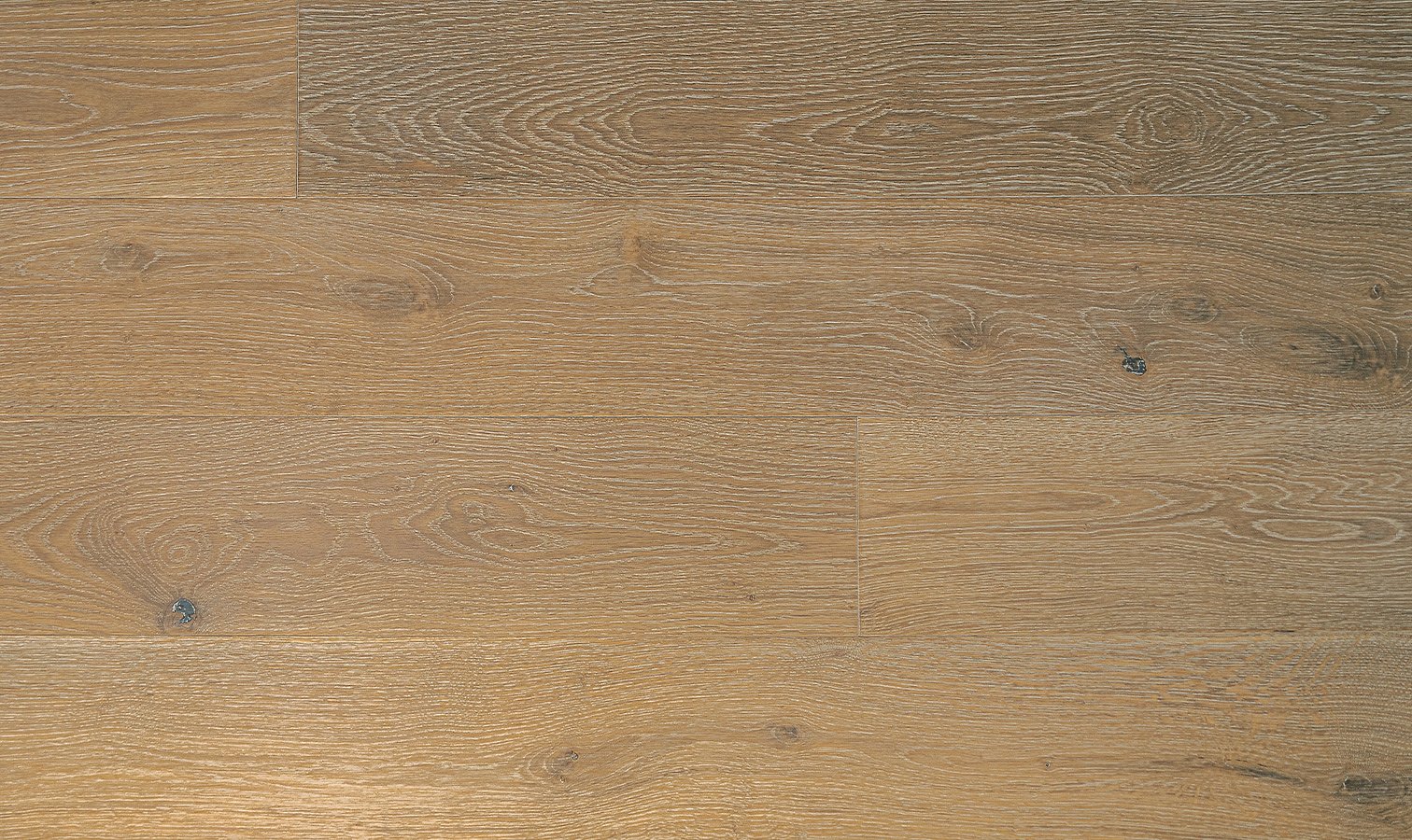
Live-sawn timber
With live sawing, the log is cut straight through in a sequence of parallel passes. Its orientation remains largely unchanged during the process. Boards taken from different positions within the same log therefore display a mixture of grain orientations.
The centre boards may show quarter- or rift-sawn characteristics, with plain-sawn figure appearing closer to the outer sections. This creates a broad visual range across the finished timber, including straight grain, cathedral figure and changes between heartwood and sapwood where the specification allows them.
Live sawing makes good use of the log and can produce impressive board widths. Its varied grain is well suited to floors where the full natural character of the timber forms an important part of the design.

Quarter-sawn timber
To produce quarter-sawn timber, the log is first divided into quarters. The boards are then cut so that the growth rings meet the wide face at a steep angle, generally between 45 and 90 degrees.
Quarter-sawn boards usually have a straighter, more consistent grain than plain-sawn boards. In oak, the cut can expose the medullary rays as distinctive silver-grey flecks or ribbons across the face. These natural markings bring another layer of detail to the timber.
This grain orientation reduces shrinkage and swelling across the width of the board. Quarter-sawn timber also has a lower tendency to cup, split or surface-check during drying and use. The process requires additional handling and usually produces narrower boards and a lower yield from each log.

Rift-sawn timber
Rift-sawn timber is selected for a particularly straight, even grain. In flooring and architectural woodwork, the term commonly describes boards whose growth rings meet the face at an intermediate angle. This reduces the sweeping cathedral figure seen in plain-sawn timber and limits the prominent ray fleck associated with quarter-sawn oak.
Milling for a consistent rift-sawn appearance is precise and produces a relatively low yield. Boards are often narrower, and the greater amount of processing can influence their cost and availability.
The linear grain creates a calm, refined surface with a strong sense of direction. Rift-sawn timber is especially effective where visual consistency, clean architectural lines and controlled natural movement are central to the scheme.
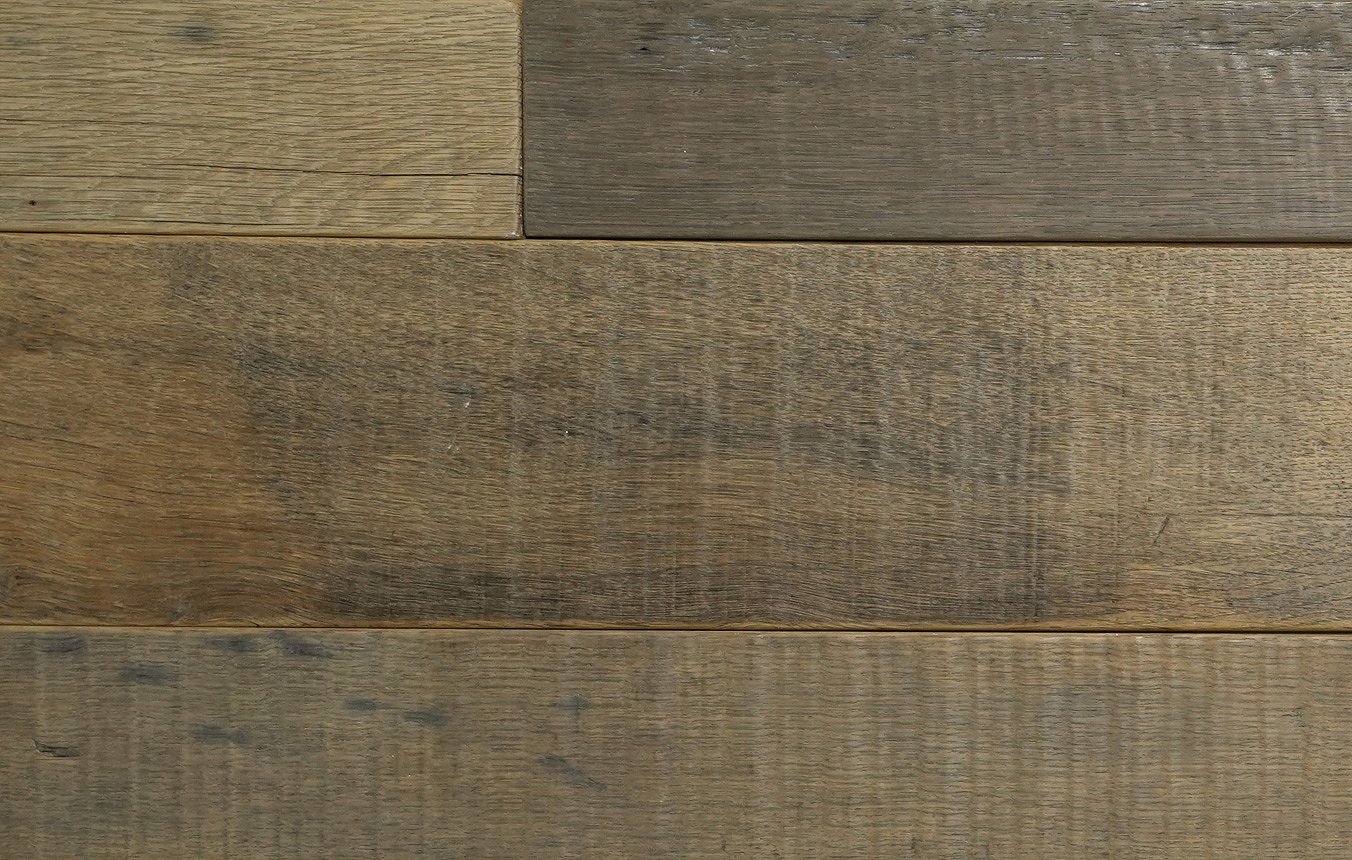
Timber cut, grade and texture
Timber cut describes the orientation of the growth rings within the board. Grade relates to the type and frequency of natural characteristics permitted within a floor, including knots, colour variation and sapwood. Texture refers to the surface treatment applied during making, such as brushing, sawing or planing.
These elements work together to shape the finished floor. A plain-sawn prime-grade board can feel clean and refined. The same cut in a more expressive grade may feature knots, wider tonal movement and stronger grain variation. Quarter- or rift-sawn timber can still display natural characteristics according to the selected grade.
On an engineered wood floor, the cut is visible within the hardwood wear layer. The supporting layers beneath it provide additional structural stability, allowing the natural appearance of the chosen timber to be used across a wide range of interiors.
Choosing a timber cut for your interior
The right cut depends on the species, board proportions, desired grain pattern and wider design scheme.
- Plain sawn offers expressive grain and sweeping natural figure.
- Live sawn presents a varied picture of the whole log and can produce generous widths.
- Quarter sawn creates straighter grain, distinctive ray detail in oak and improved stability across the board width.
- Rift sawn delivers a fine, linear appearance with restrained figuring.
Timber is naturally varied, so an individual sample can show only one part of its character. Viewing several boards or a larger presentation panel will give you a fuller understanding of the grain, tone and features that will appear across an installed floor.
Explore Ted Todd wood flooring, or contact our team for help comparing species, grades, formats and timber character for your project.