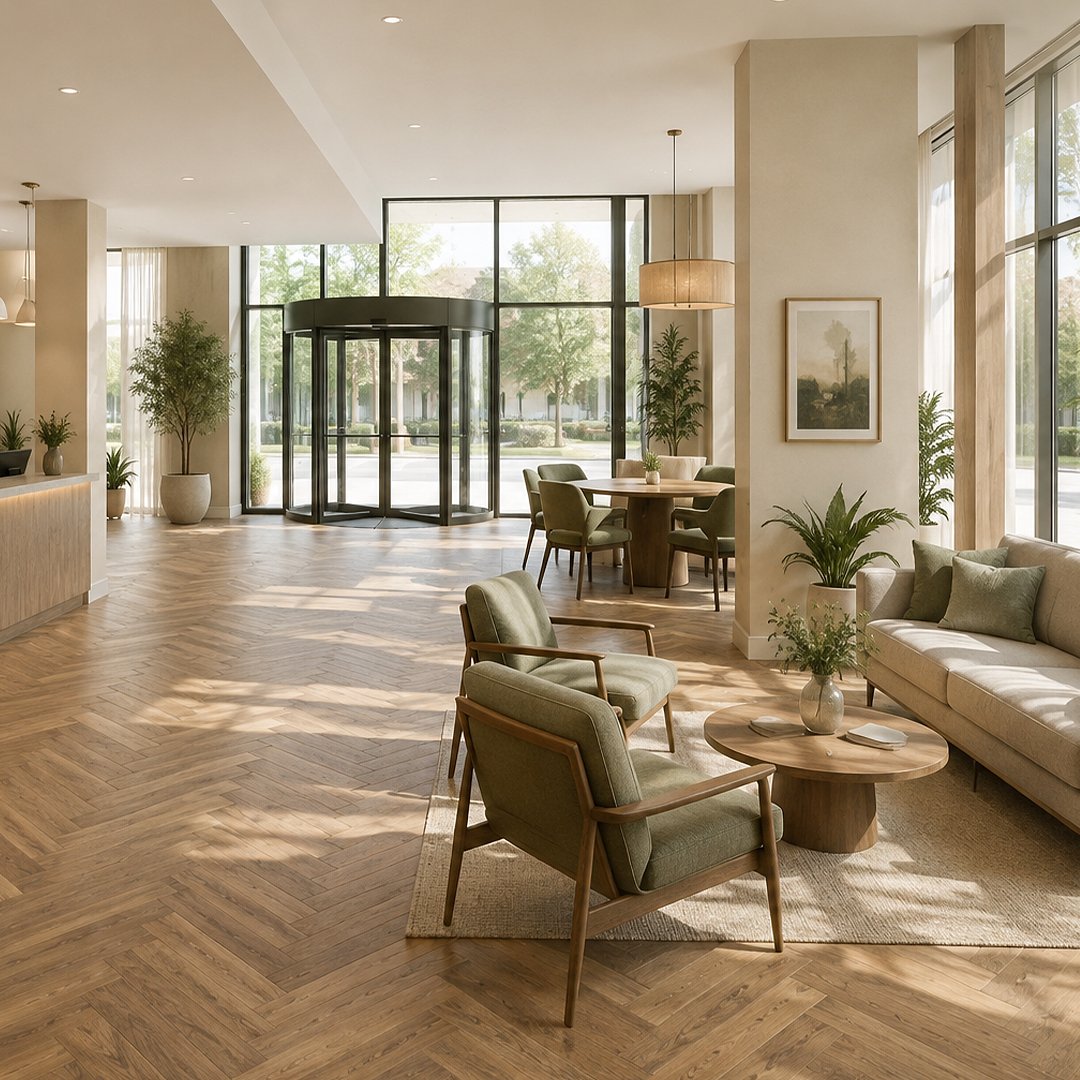
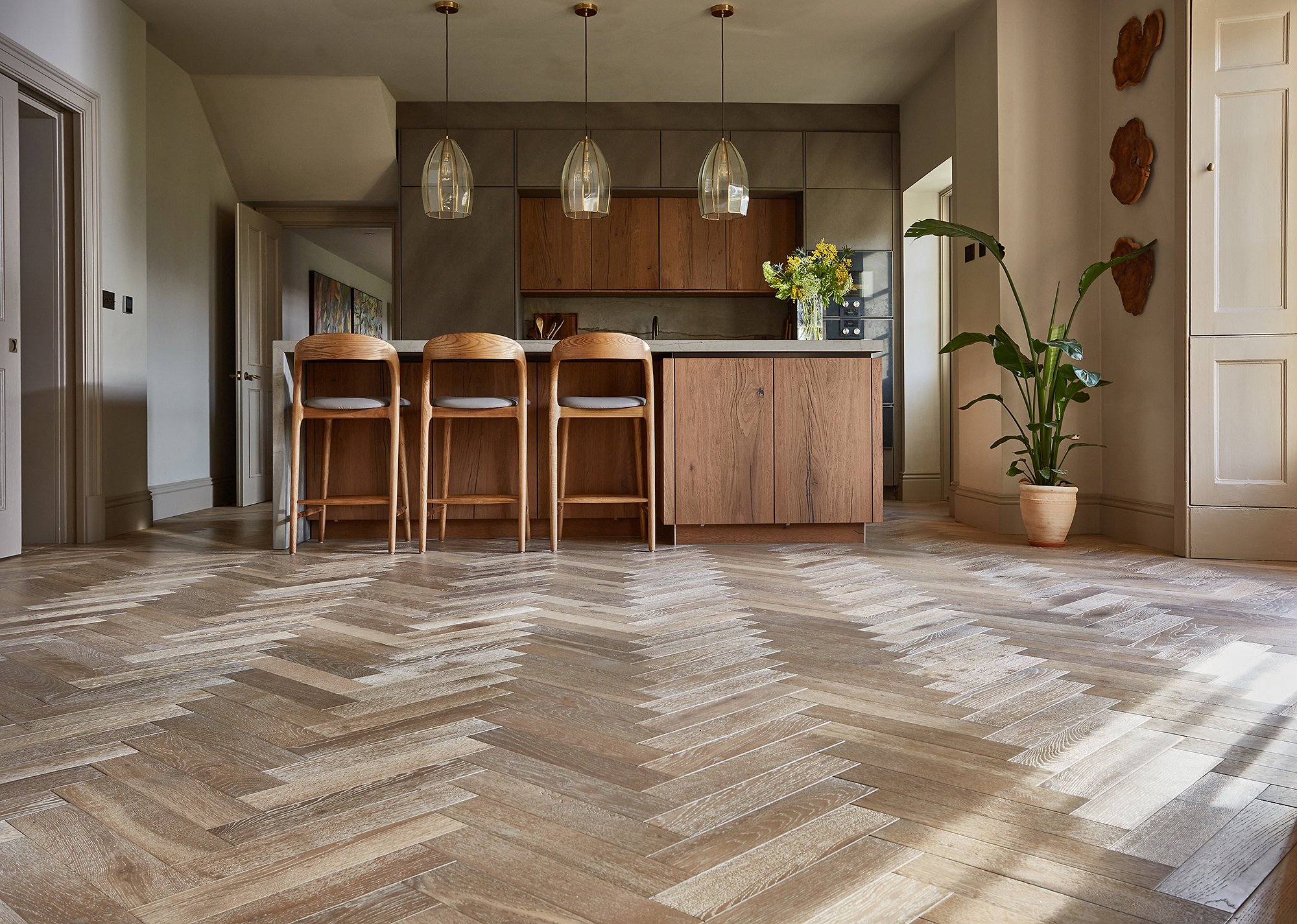
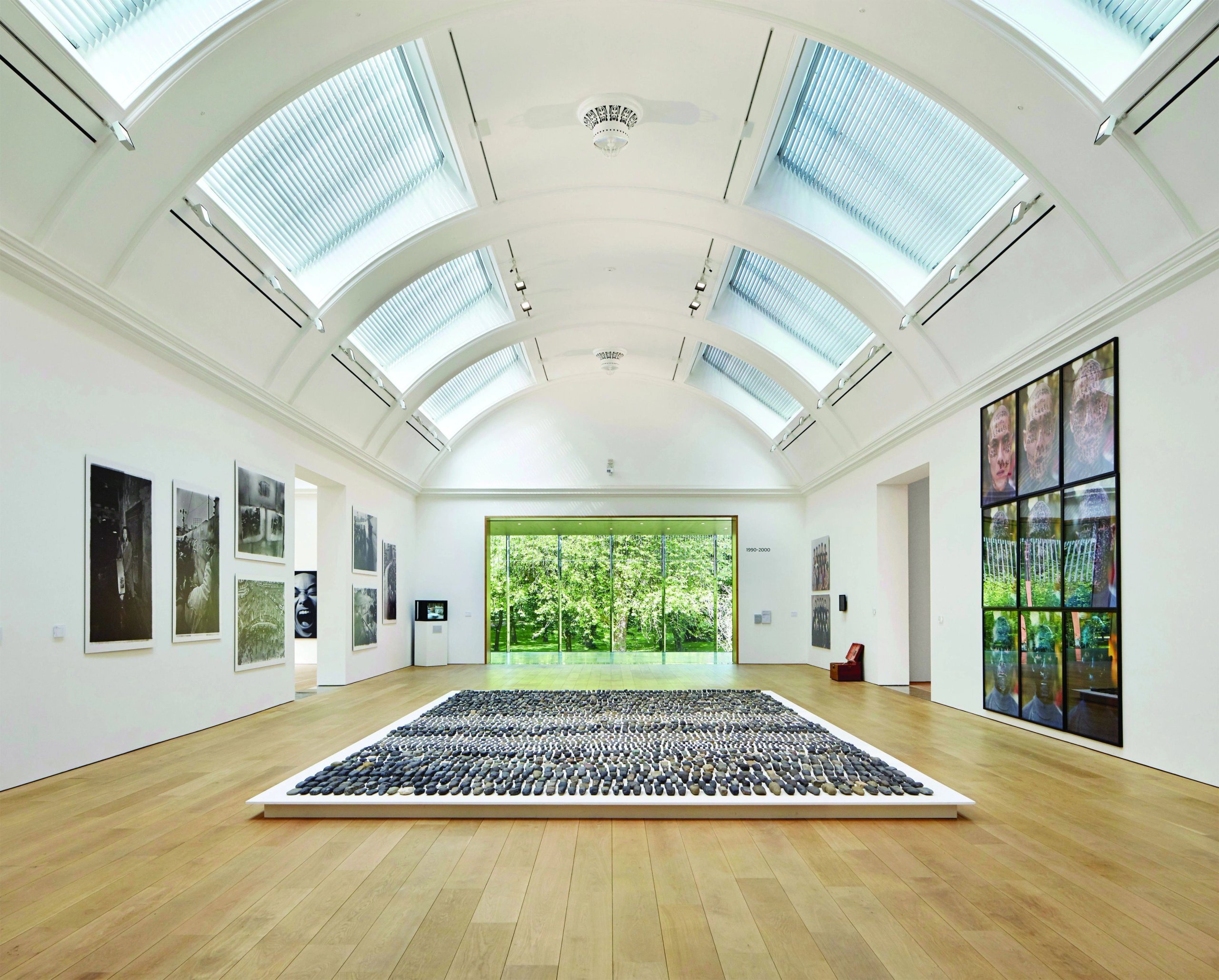
A wood floor’s environmental story covers its full lifecycle: where the timber comes from, how the floor is made and installed, how it is maintained, and what happens when a space changes. A long service life reduces the need for frequent replacement, helping the value of the original material and craftsmanship endure.
This guide explains the decisions that can support the longevity of a real wood floor, from responsible sourcing and technical specification to care, restoration and reuse.
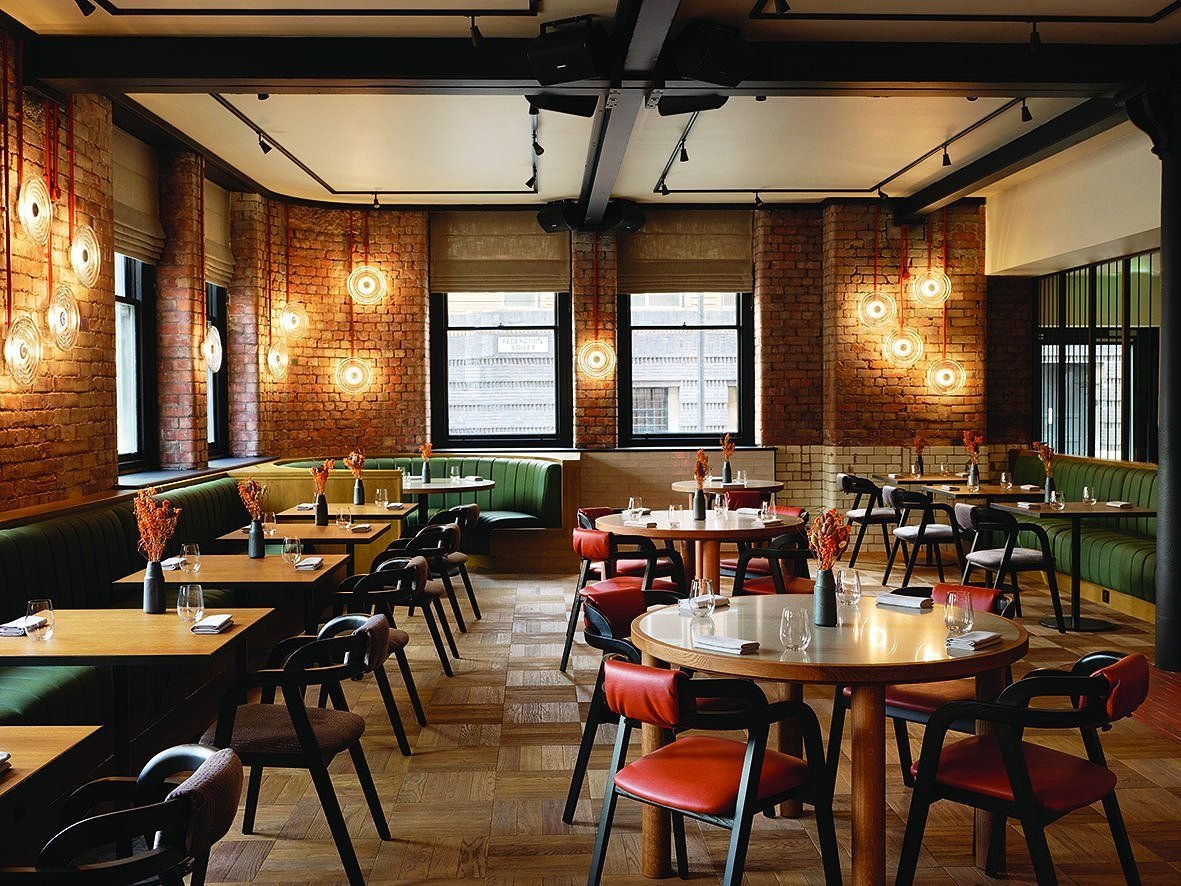
What makes a wood floor a long-life choice?
Real wood is naturally suited to interiors designed for lasting use. Its surface develops character over time and, depending on the floor’s construction and finish, it may be maintained, repaired or professionally refinished as it ages.
Longevity depends on several connected decisions:
- selecting responsibly sourced timber;
- choosing a construction suited to the room and subfloor;
- using an appropriate wear layer and finish;
- following the correct installation method;
- maintaining the floor with compatible products; and
- repairing or renewing the surface when required.
Each stage contributes to the floor’s appearance, performance and useful life.
Responsible sourcing starts with the specification
A timber species cannot be judged on its name alone. Its origin, forest management, chain of custody and supporting documentation all need to be considered.
Independent certification schemes such as FSC® and PEFC help provide assurance around responsible forest management and the movement of timber through the supply chain. Certification varies between products, so check the individual floor specification and its stated credentials when making a selection.
You can read about Ted Todd’s approach to the environment and certification.

Choose the right floor for the space
A floor designed for its setting is better placed to perform over the long term. The demands of a quiet bedroom differ from those of a busy kitchen, entrance or commercial interior.
Consider:
- expected footfall;
- exposure to moisture, dirt and direct sunlight;
- the type and condition of the subfloor;
- compatibility with underfloor heating;
- the intended installation method;
- the maintenance programme; and
- the possibility of future surface renovation.
Engineered wood flooring is constructed with a real wood surface supported by layers beneath. This structure provides dimensional stability and makes engineered floors suitable for a wide range of projects. Solid wood flooring can also provide a long service life in appropriate conditions. The product specification should always guide the choice.
Understand the wear layer
The wear layer is the real wood surface of an engineered floor. Its thickness is one factor in determining whether a floor can be sanded and refinished in the future.
Refinishing also depends on the floor’s construction, the remaining timber above the tongue and groove, its installation method, previous treatments and the depth of any damage. Refer to the technical information for the individual product and ask an experienced flooring professional to assess the floor before sanding begins.
A full sand is only one form of renewal. Some finishes can be refreshed through deep cleaning, maintenance treatments or localised repair, preserving the existing surface with less intervention.

Correct installation protects the floor
The service life of a wood floor is closely connected to the quality of its installation. Moisture, movement or an unsuitable subfloor can affect even a well-made product.
Before fitting begins, the installer should confirm that the site conditions and subfloor meet the requirements for the chosen floor. This includes moisture testing, subfloor preparation, acclimatisation where specified, suitable expansion provision and the correct adhesive or fixing system.
Projects with underfloor heating also require careful commissioning and temperature control. Sudden changes in heat can place unnecessary stress on natural timber.
Our complete fitting instructions and chapter-by-chapter technical guidance are available in the Ted Todd document centre. Always follow the installation information supplied for the selected product.
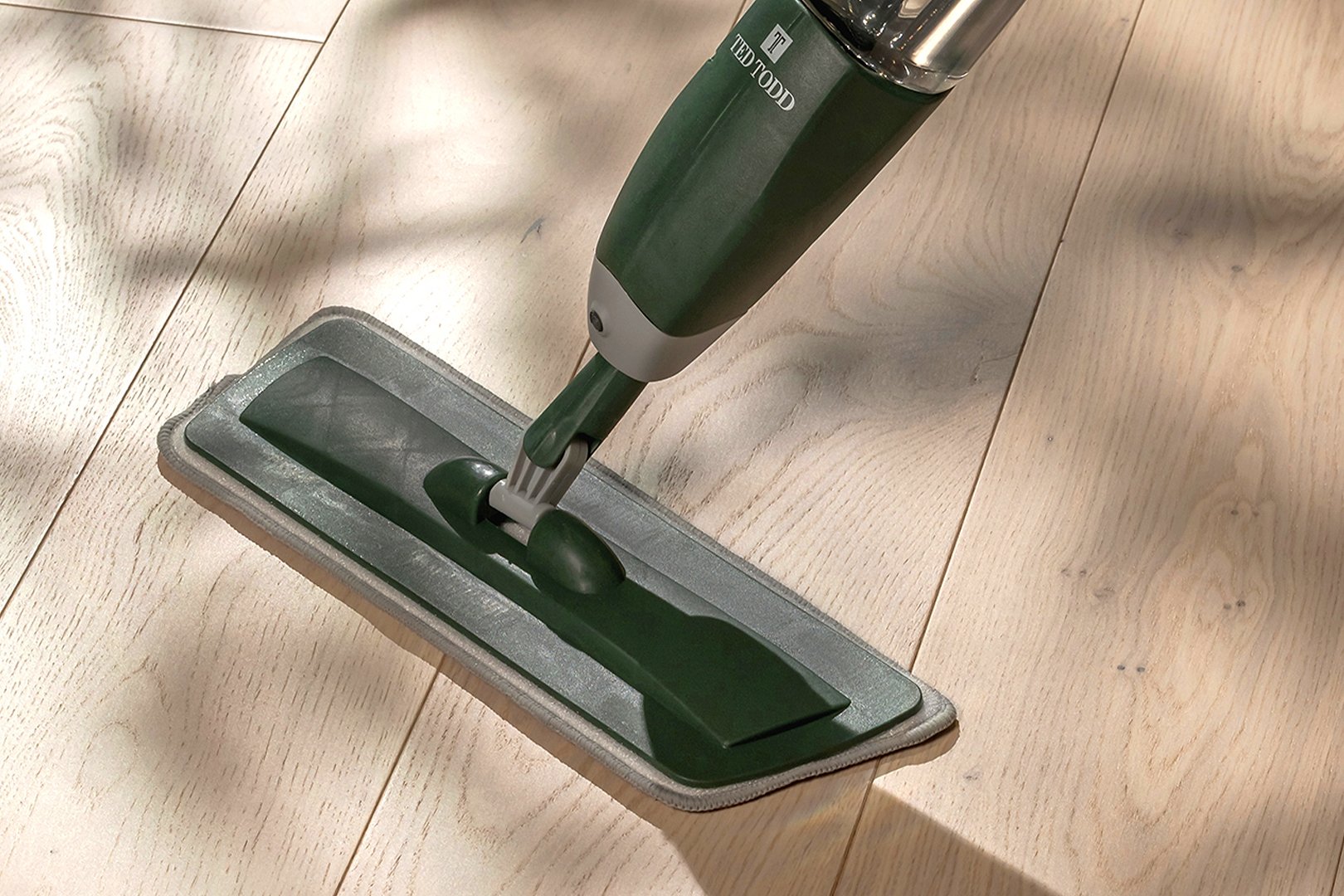
Care for the finish as well as the timber
Routine care protects the applied finish, which in turn protects the wood beneath it. Ted Todd Floor Care Systems are matched to different finishes, giving each floor the cleaning and maintenance products it requires.
Simple habits can help preserve the surface:
- use entrance mats to reduce grit and moisture;
- remove loose dust with a soft brush or suitable vacuum attachment;
- wipe up spills promptly;
- use felt protectors beneath furniture;
- lift furniture instead of dragging it;
- follow the recommended dilution and application instructions; and
- apply the appropriate maintenance treatment when the finish requires it.
Avoid excessive water, steam cleaners and general-purpose detergents unless the floor manufacturer has confirmed that they are suitable. These can affect the finish and may allow moisture to reach the timber.
Visit Ted Todd Floor Care to identify the correct care system for your floor.
Repair and renew when required
Wear often appears first in concentrated areas such as entrances, routes through open-plan rooms and spaces beneath dining chairs. Early attention can prevent a small issue from becoming widespread.
The appropriate response may involve a maintenance coat, local repair, replacement of individual boards or professional refinishing. Oil- and lacquer-finished floors require different methods, so establish the original finish and care system before any work starts.
Keep the floor’s product name, specification, installation records and care instructions. This information will help installers and floor-care specialists make informed decisions later in its life.
Reclaimed and antique wood through Woodworks by Ted Todd
Ted Todd offers an extensive range of new wood floors for residential and commercial interiors. Woodworks by Ted Todd, our sister brand within the Ted Todd Group, creates extraordinary British floorcraft across modern and historic collections.
The Woodworks historic portfolio is the home of our reclaimed and antique floors. Its makers source and restore characterful timber in the Cheshire workshops, preserving existing material and preparing it for a new architectural setting.
Explore historic flooring from Woodworks by Ted Todd or discover the brand’s approach to sustainability.
Plan for the floor’s next chapter
Changing interiors do not always mean the end of a floor’s useful life. Depending on its condition, construction and installation method, timber may be lifted for reuse, repaired for another setting, or reclaimed and reworked into a new design.
Recycling options vary according to the materials used, surface treatments, adhesives and local facilities. Planning for future access during specification can improve the prospects for recovery later.
A long-life flooring checklist
Before confirming a floor, ask:
- What responsible-sourcing certification or documentation applies to this product?
- Is its construction suitable for the room, subfloor and heating system?
- Does the finish suit the expected footfall and maintenance routine?
- Who will install it, and which technical guidance must they follow?
- Which Ted Todd Floor Care System applies?
- What maintenance or renovation options could extend its service life?
- Can the floor’s records be retained for future owners or contractors?
Thoughtful specification gives natural timber the conditions it needs to perform, age gracefully and remain part of an interior for many years.
Explore Ted Todd wood flooring or contact our team for help choosing a floor suited to your project.