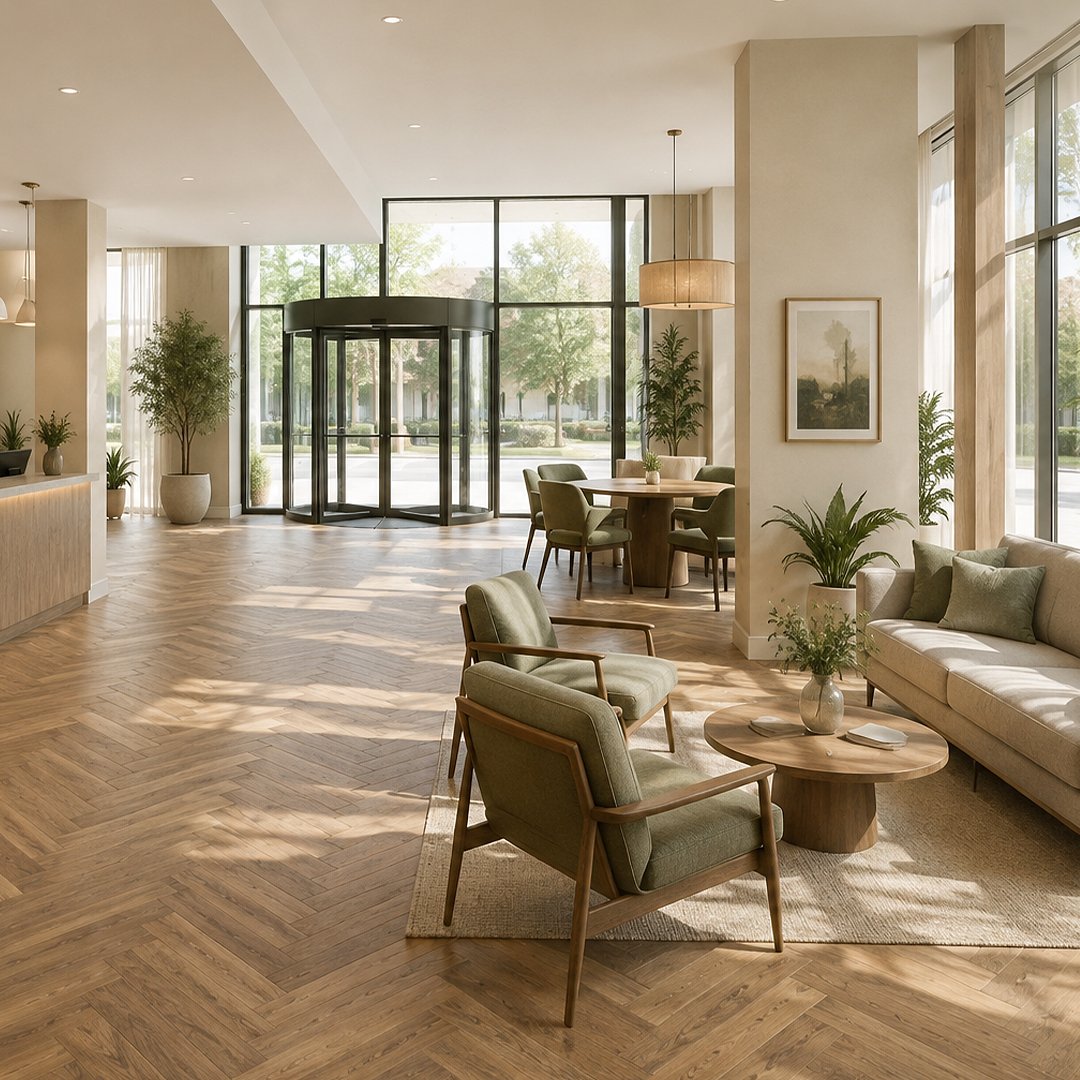
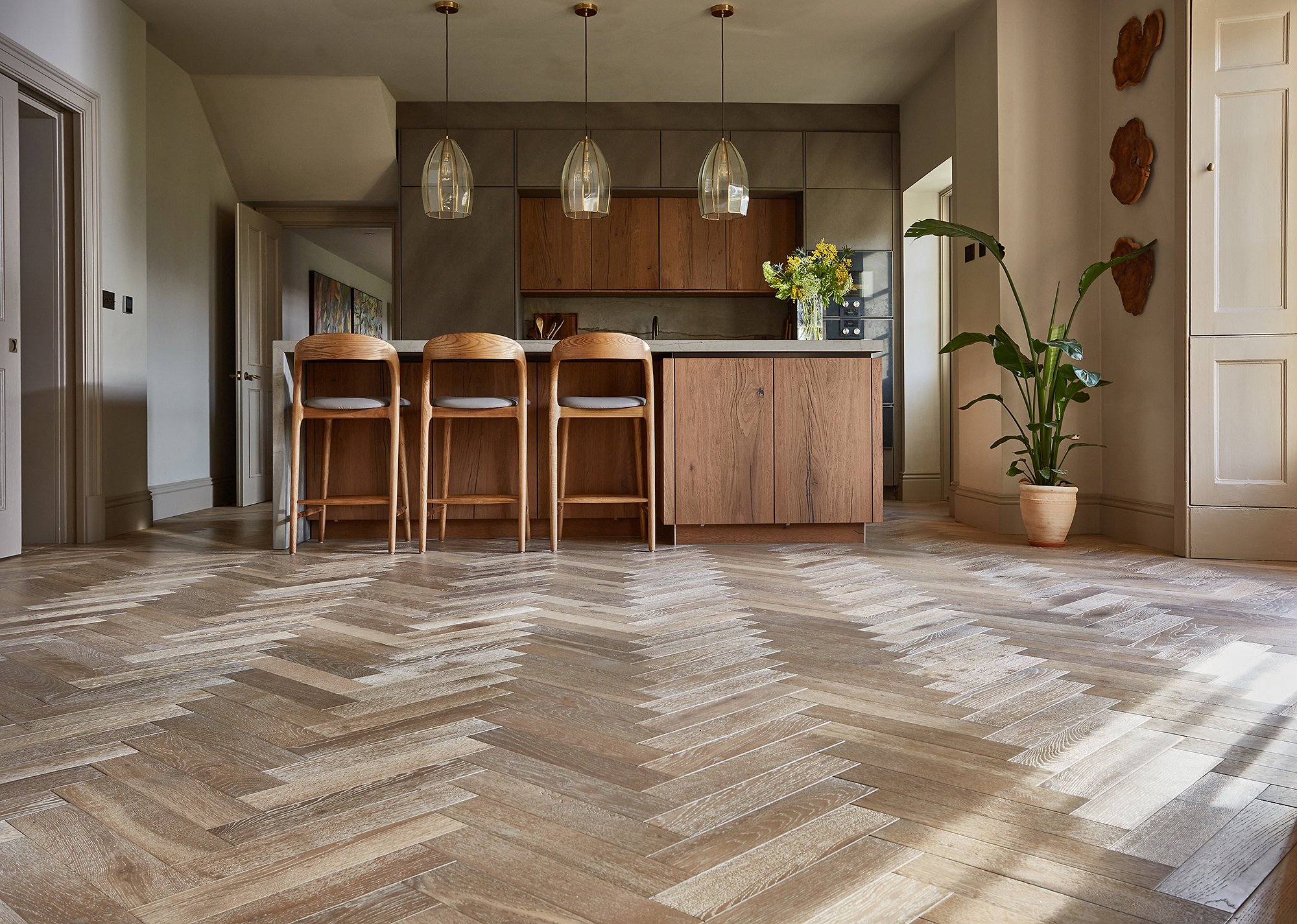
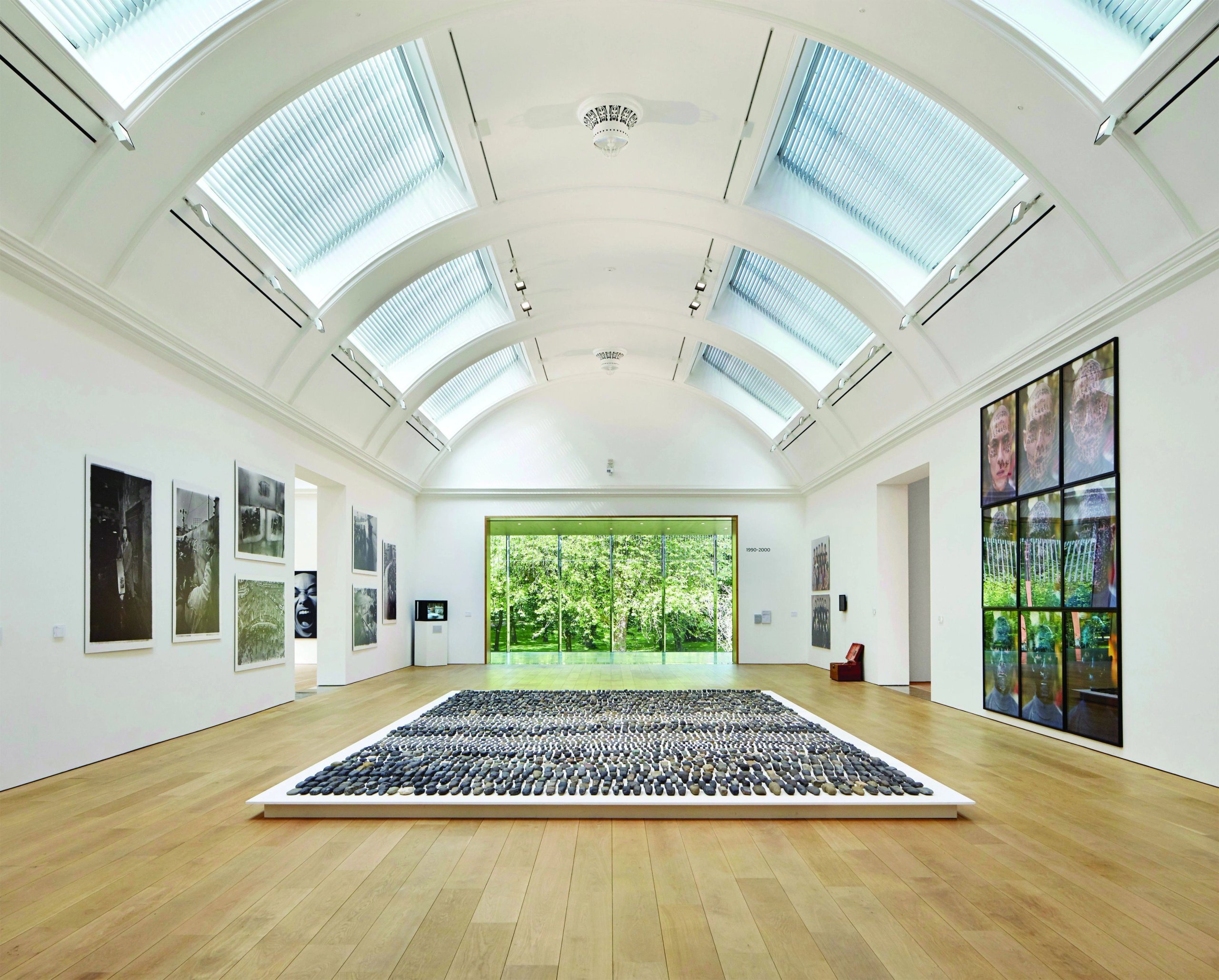
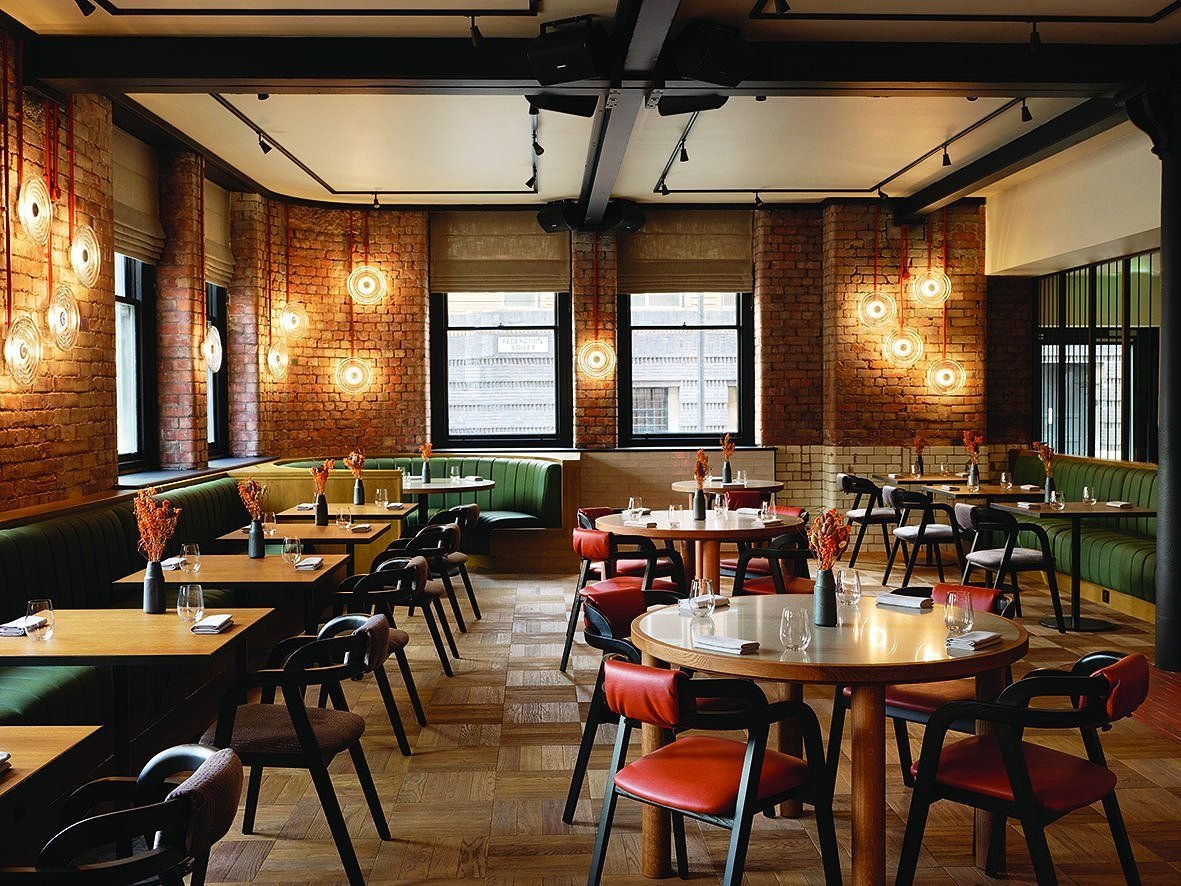
Hexagonal wood flooring brings structure, movement and a strong sense of craftsmanship to an interior. Its repeating geometry draws the eye across the room, and the changing direction of the timber reveals subtle variations in grain and tone.
The pattern can become a defining feature across an entire floor or create a focused area within a larger scheme. The right approach depends on the scale of the room, the character of the wood and the way the space will be used.

What is hexagonal wood flooring?
Hexagonal flooring is created from precisely cut timber elements arranged into a six-sided repeating pattern. Some designs use complete hexagonal sections. Others combine diamonds, trapezoids or smaller blocks to form the hexagonal motif.
As the timber changes direction within the pattern, each element catches the light differently. This gives the floor a sense of depth and movement, even when a single wood tone is used throughout.
Hexagonal patterns have an architectural quality that suits period and contemporary interiors. Their symmetry feels ordered, with the natural variation of real wood keeping the surface expressive and individual.
Exploring different hexagonal patterns
The term ‘hexagonal flooring’ covers several geometric arrangements. Understanding their character can help you choose a pattern that complements the room.
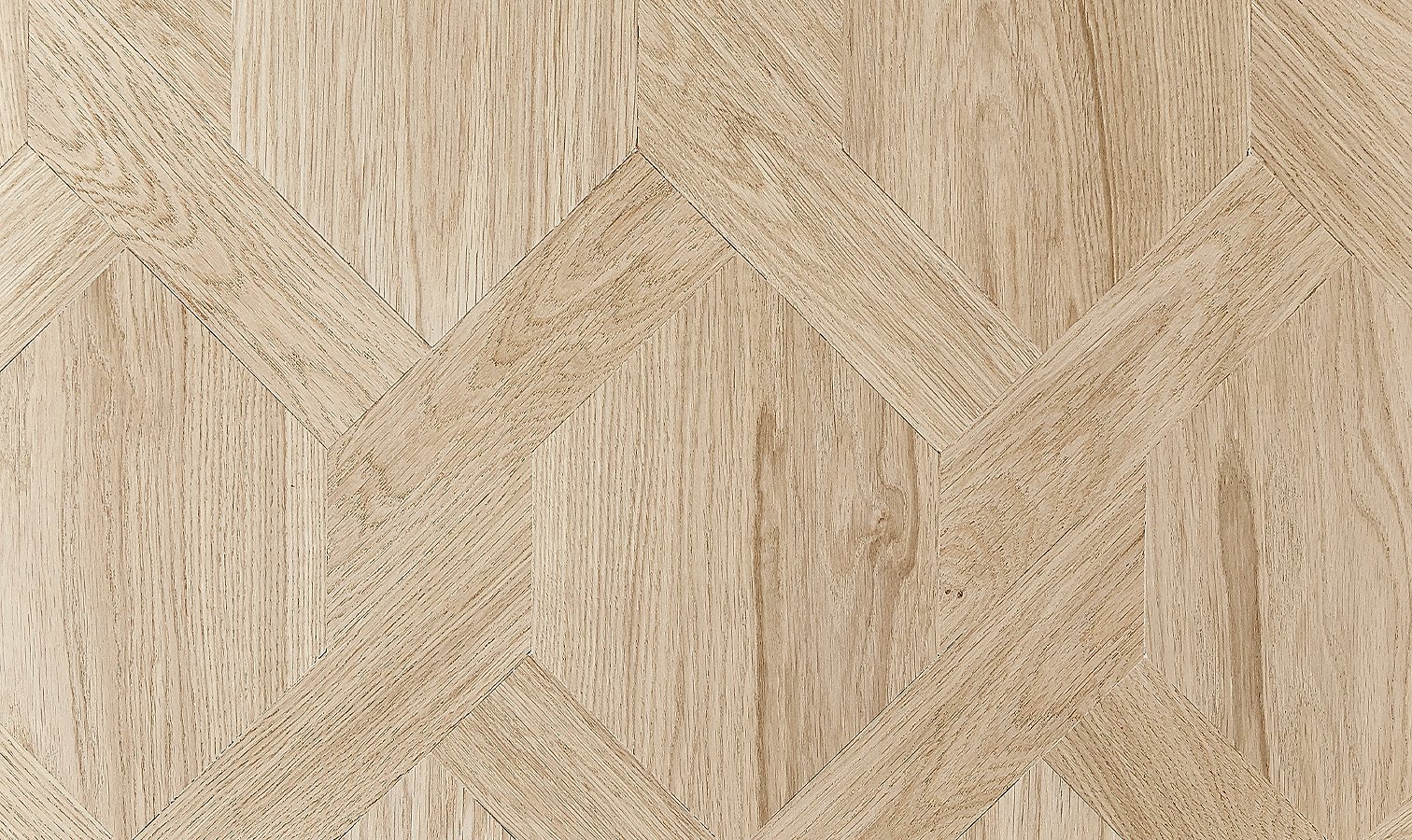
Mansion weave
Mansion weave is an intricate parquet design built from smaller timber pieces arranged around a central geometric form. The interlocking composition creates a detailed, almost woven appearance.
It works particularly well in entrance halls, living spaces and dining rooms where the floor can be appreciated from several viewpoints.
You can achieve this look using Avery from our Unfinished Oaks collection
Diamond-based patterns
Diamond-shaped blocks can be grouped to create a repeating hexagonal effect. Their strong diagonal lines introduce direction and can make the pattern appear three-dimensional from certain angles.
A diamond-based design can feel crisp and graphic in a modern interior or quietly decorative when paired with a natural oak finish.
Capture this effect using Shrawley from our Unfinished Oaks collection.

Bespoke geometric compositions
The scale, proportion and arrangement of a geometric floor can also be developed for a particular project.
Our sister brand, Woodworks by Ted Todd, specialises in rare, reclaimed and exceptional woods, alongside handmade and bespoke flooring created by expert makers in Cheshire. Its bespoke design service can explore distinctive patterns, timber combinations and finishes for projects requiring a completely individual response.

Ted Todd hexagonal wood floors
Our Unfinished Oaks collection includes two geometric designs that can be finished on site to suit the wider interior scheme.
Avery
Avery interprets the intricacy of mansion weave through carefully arranged European oak elements. Its nature grade allows knots, tonal movement and other authentic features of the timber to contribute to the design.
Avery is a 20mm, 2-ply engineered floor with a substantial 6mm wear layer and square shoulders. Its smooth, unfinished surface gives the specifier control over the final colour, sheen and protection system.
It is FSC® certified and suitable for use with underfloor heating when installed in accordance with our technical guidance.
Shrawley
Shrawley uses diamond-shaped European oak blocks to create a repeating hexagonal pattern. The prime grade provides a cleaner and more consistent appearance, allowing the geometry to take visual precedence.
This 19mm, 2-ply engineered floor has a nominal 6mm wear layer, a smooth unfinished surface and micro-bevelled edges. Its restrained timber character makes it particularly effective in schemes built around precise lines and a refined material palette.
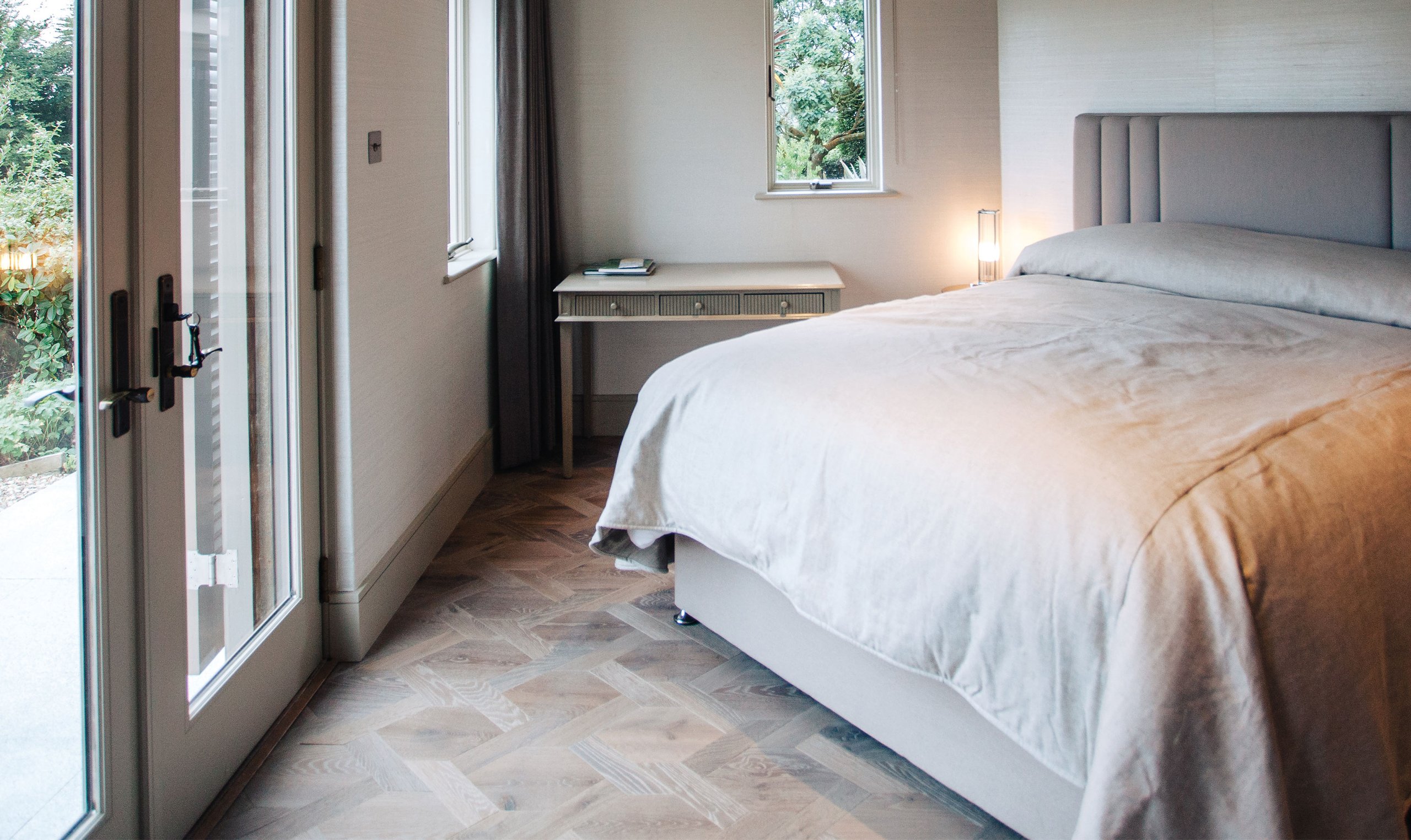
Consider the scale of the room
Pattern scale has a significant influence on how a hexagonal floor is perceived.
In a large open-plan space, repeated geometry can unite different functional areas and create rhythm across the room. Generous sightlines also allow the complete pattern to be viewed more easily.
Hexagonal flooring can work equally well in a smaller room. Careful set-out is essential so that recognisable sections of the pattern remain visible around fixed cabinetry, islands, fireplaces and furniture.
Reviewing a scaled floor plan with your installer will help establish the most balanced starting point and reduce awkward cuts at the perimeter.
Think about how people will enter and move through the space. Aligning the pattern with a principal doorway, corridor or architectural feature can strengthen the relationship between the floor and the room.
Choose the right grade and finish
The grade of the wood changes the overall expression of a geometric floor.
A prime grade creates a calm, consistent surface with limited natural variation. Nature grade introduces a broader range of tones, knots and grain features, giving each repeat of the pattern its own character.
An unfinished floor offers considerable creative control. It can be finished on site to coordinate with joinery, furniture and other timber elements. Pale finishes tend to emphasise the lines and proportions of the pattern. Deeper tones can create a richer and more dramatic foundation.
The chosen finish must also suit the demands of the room. Kitchens, hallways and commercial settings may require a protection system selected for greater wear, regular cleaning and the expected level of footfall.
Always use compatible finishing and maintenance products and follow the product specification in full.
Ways to use hexagonal flooring
Across the whole room
A continuous hexagonal pattern creates a confident, cohesive floor. This approach is especially effective in reception rooms, dining areas and open-plan spaces where the geometry can extend across an uninterrupted surface.
To define a zone
Geometric flooring can mark out a particular part of a multifunctional room, such as a dining area, seating space or entrance.
A carefully planned border or transition can frame the pattern and give the zone a clear visual identity.
Alongside planks
Hexagonal flooring can meet planks to create a change in pace between connected spaces.
The transition needs to be resolved during the design stage so that floor heights, board direction and perimeter details work together. A clean framed edge offers a formal finish. A carefully designed interlocking transition can give the junction a more expressive character.
As a central feature
A panel of geometric flooring can create a rug-like focal point within a larger plank floor.
This treatment suits entrance halls, formal dining rooms and spaces organised around a central table or pendant light. Accurate dimensions and symmetry are key to making the feature feel integral to the architecture.

Using hexagonal flooring in commercial interiors
Geometric wood flooring can bring warmth and distinction to hotels, restaurants, retail environments and workspaces. It can guide movement, identify reception areas or establish a memorable centrepiece within a larger scheme.
Commercial specifications should account for footfall, cleaning routines, entrances and the potential movement of furniture. Confirm that the chosen product, finish and installation method are suitable for the intended environment before work begins.
Planning the installation
Hexagonal flooring requires precise setting out and should be fitted by an experienced wood-flooring installer.
The subfloor must be dry, sound, flat and suitable for the specified installation method. Conditions within the building also need to be stable before the flooring is delivered, acclimatised and installed.
The installer should establish accurate reference lines and dry-lay a representative section before fixing begins. This allows the pattern position, border widths and cuts around architectural features to be reviewed in advance.
Full technical requirements vary by product and project. Visit our documents library for installation guides, technical information and individual guidance chapters. These documents should be read alongside the relevant product specification before installation.
Underfloor heating and ongoing care
Avery is suitable for use with underfloor heating when the complete floor build-up and heating system meet Ted Todd’s guidance. Suitability should always be confirmed for the individual floor, adhesive, subfloor and heating arrangement.
Once installed and finished, the floor should be maintained with the care system specified for its final surface treatment.
Routine dry cleaning, prompt attention to spills and controlled use of moisture will help preserve both the timber and its finish. Find compatible cleaners, maintenance products and guidance through Ted Todd Floor Care.

Create a distinctive geometric floor
Hexagonal wood flooring combines the precision of parquetry with the natural depth and variation of real timber.
By considering pattern, grade, finish, scale and installation together, you can create a floor that feels closely connected to the room and its architecture.
Explore Avery and Shrawley, or contact our team for help specifying geometric wood flooring for your project.