Engineered and solid wood floors share the same natural beauty at the surface. Their construction differs, influencing stability, installation, underfloor heating compatibility and future renovation.
Understanding these practical differences will help you select a floor suited to the building, the room and the way the space will be used.

What is engineered wood flooring?
Engineered wood flooring has a surface layer of genuine hardwood bonded to a supporting structure beneath. This top section is known as the wear layer.
The core can be made in several ways. Ted Todd engineered floors include 2-ply, 3-ply and 3-layer constructions. Each structure is designed to help manage the natural movement of timber as interior temperature and moisture levels change.
Once installed, the visible surface is real wood. It carries the grain, tonal variation, knots and individual characteristics associated with the selected species and grade.

What is solid wood flooring?
Solid wood flooring is machined from a single piece of timber. The same wood species continues through the full depth of the board.
This traditional construction gives the floor a reassuring material integrity. It also means the board responds directly to changes within its surroundings. Careful site preparation, moisture control and installation are especially important.
Solid flooring is available in different thicknesses, widths, grades, textures and finishes. Its suitability depends on the individual product and the conditions within the project.

Can you see the difference once the floor is installed?
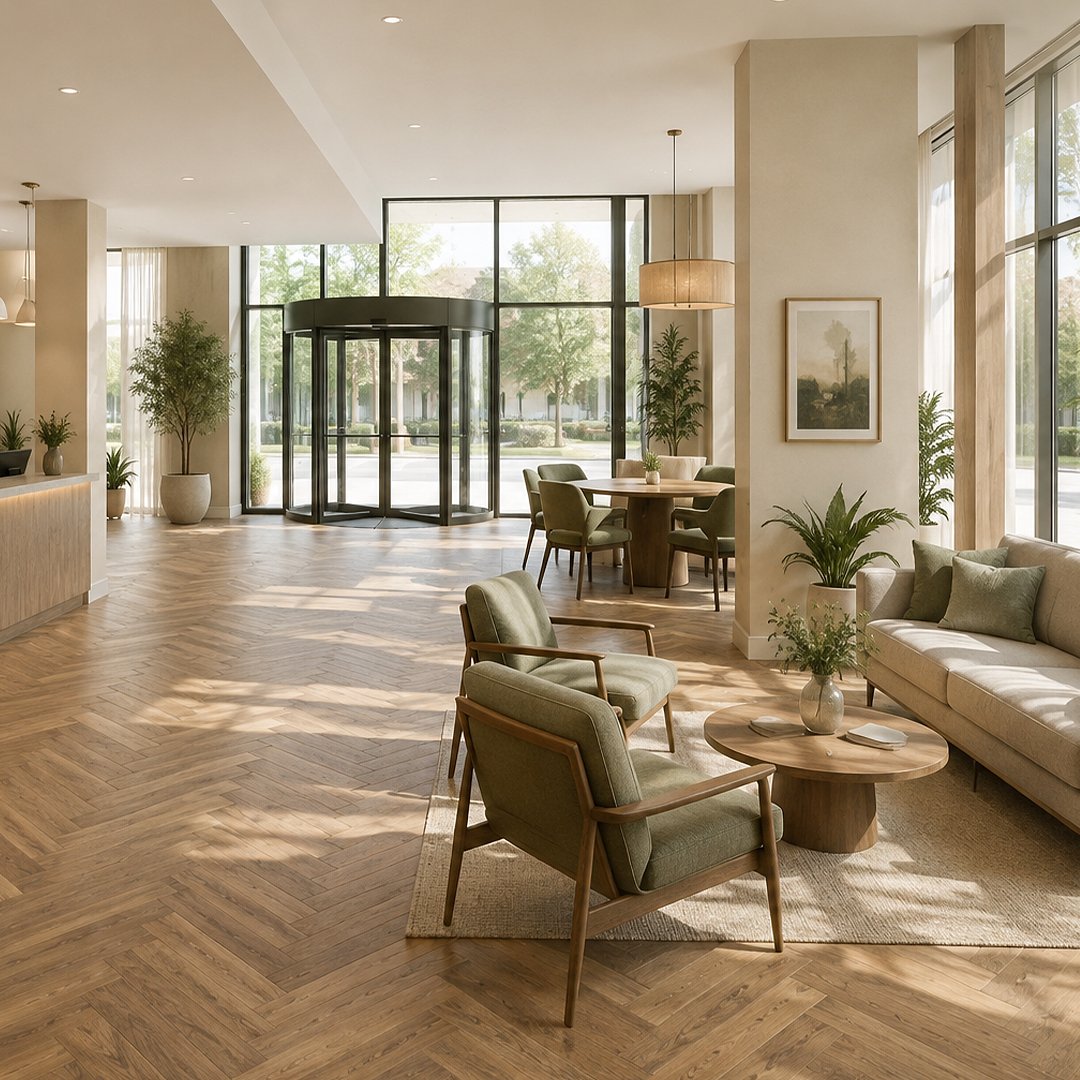
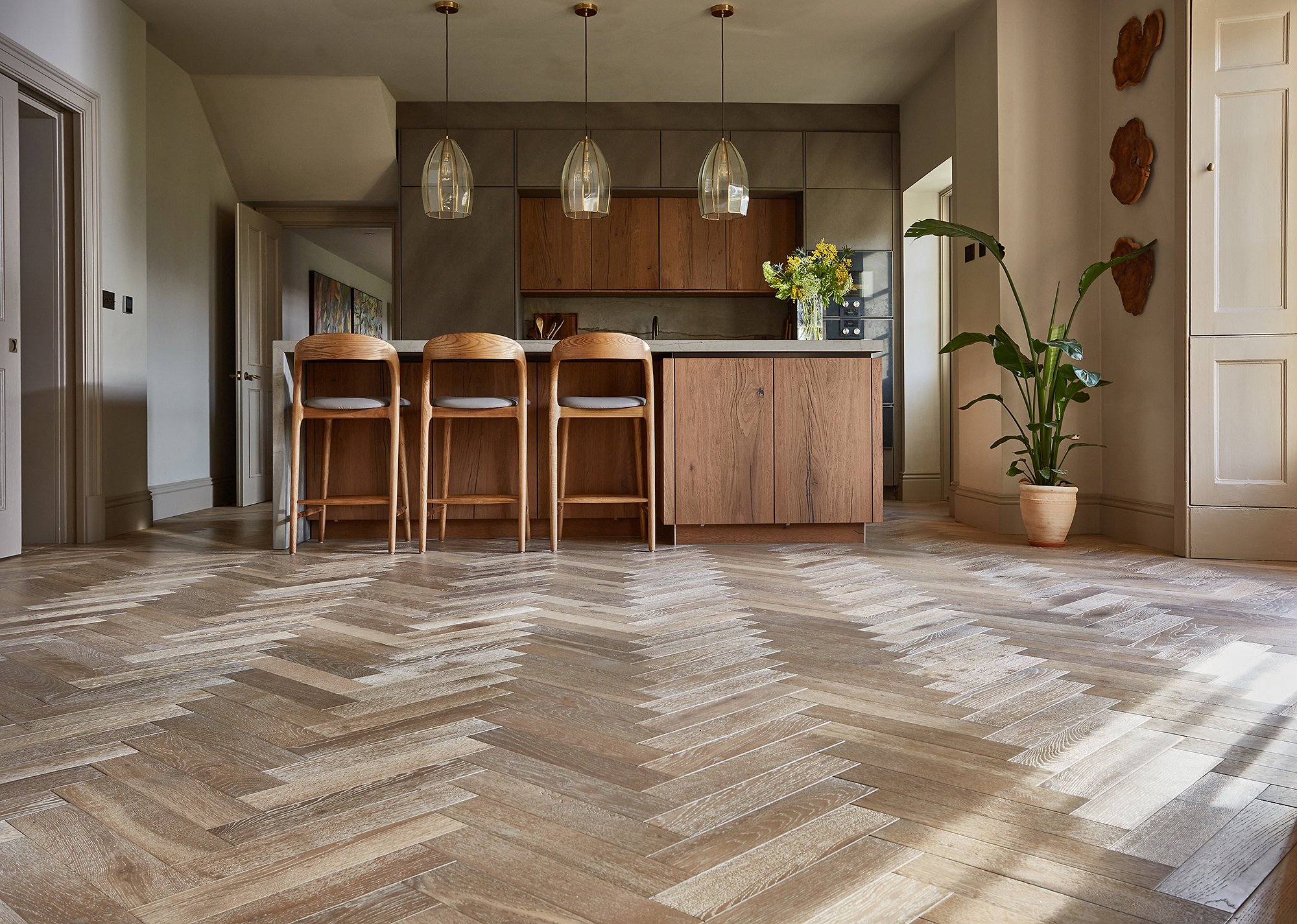
Construction has very little influence on the finished appearance. An engineered floor and a solid floor made from the same species, grade and finish can look almost identical after installation.
The visual character comes from the timber itself and the decisions made around:
- species;
- grade;
- colour;
- surface texture;
- finish;
- board dimensions; and
- pattern.
The reverse or edge of a loose board reveals its construction. Across an installed floor, the distinction is usually difficult to identify by sight alone.
Which construction is more stable?
Wood naturally responds to its environment. It absorbs and releases moisture as conditions change, causing small amounts of expansion and contraction.
The layered structure of engineered flooring helps balance this movement. Engineered boards generally offer greater dimensional stability, making them a versatile choice for contemporary buildings, wide flooring formats and projects where environmental conditions may fluctuate.
Solid boards respond more directly across their width. The room conditions, subfloor moisture and board dimensions must be assessed carefully before installation. Maintaining a stable internal environment will support the floor throughout its life.
Dimensional stability does not remove the need for correct preparation. Every real wood floor requires suitable site conditions and installation in accordance with its technical guidance.

Can engineered and solid wood flooring be used with underfloor heating?
Underfloor heating is often a decisive part of the specification.
Many Ted Todd engineered floors are suitable for use with compatible underfloor heating systems. The layered construction helps the boards manage gradual temperature changes. Suitability must be confirmed on the individual product specification.
Solid wood flooring is generally unsuitable for installation over underfloor heating because direct changes in heat can increase natural movement within the boards.
The heating system should be commissioned correctly, with temperatures adjusted gradually and kept within the limits stated in the relevant installation guide. Full technical guidance is available from the Ted Todd document centre.
How are engineered and solid wood floors installed?
The available installation method depends on the floor’s construction, joint profile, dimensions and subfloor.
Engineered flooring may be:
- fully bonded to a suitable prepared subfloor;
- secret-nailed or secret-screwed to an appropriate timber base; or
- floated when the product has an approved joint system and the instructions permit it.
Solid wood flooring is usually fully bonded or mechanically fixed. A floating installation is generally unsuitable because the boards require secure restraint as they respond to environmental changes.
Every installation begins with a subfloor that is dry, level, sound and clean. Moisture testing, product storage, site conditions, expansion provision and compatible installation products all require attention.
Use an experienced wood flooring installer and follow the guidance for the exact product being fitted. Our installation documents provide complete instructions and individual chapters covering key stages of the process.

Which type is more durable?
Construction alone does not determine durability. The wood species, floor thickness, wear layer, finish, quality of installation, footfall and maintenance routine all contribute to long-term performance.
A solid board has usable timber above its tongue and groove. An engineered floor has a defined hardwood wear layer. In each case, this usable depth influences the scope for future sanding.
Ted Todd engineered floors are available with different wear-layer thicknesses. A deeper wear layer can provide greater scope for professional renovation. The number of possible sanding cycles will depend on the remaining depth, previous work and the condition of the floor.
Sanding can alter a textured or aged surface. Deep cleaning, maintenance treatments and local repairs may preserve the original character with less intervention. Ask a flooring professional to assess the surface before renovation begins.
Is engineered or solid wood flooring easier to clean?
Routine care is guided by the applied finish. An oiled engineered floor follows a different maintenance programme from a lacquered engineered floor, and the same principle applies to solid wood.
Regular dry cleaning, prompt attention to spills and protection from grit will help maintain either construction. Use the care system listed on the individual product specification.
Visit Ted Todd Floor Care for compatible cleaning and maintenance products.

Which offers greater design choice?
Engineered construction supports an extensive choice of board widths, lengths and patterns. Its dimensional stability is particularly useful for generous plank proportions and flooring designs intended to cover large spaces.
Solid flooring also comes in a considered range of formats and can bring the integrity of a single piece of timber to a project. Availability varies according to the species, dimensions and characteristics of the raw material.
Some wood floors can also be specified as wall cladding. Approval depends on the individual product, thickness, weight and fixing requirements, so check the specification before extending a flooring design onto another surface.
Which construction is more sustainable?
The environmental profile of a wood floor should be assessed across its complete lifecycle. Relevant considerations include responsible sourcing, independent certification, material use, manufacture, transport, expected lifespan, maintenance and future recovery.
Engineered construction uses selected hardwood for the visible wear layer, supported by other timber layers beneath. This can make efficient use of high-quality surface timber. Solid flooring uses one section of the same species throughout its depth.
Longevity has an important role in either format. Correct specification, installation and care can keep a well-made wood floor in use for many years. Check each product for FSC® or PEFC certification and read about Ted Todd’s environmental commitments.

Is solid wood flooring more expensive than engineered flooring?
Prices vary across both constructions. Species, grade, dimensions, pattern, surface treatments, finish and manufacturing complexity can have a greater influence on cost than the construction category alone.
Compare products using their complete specification and consider installation, care and expected service life within the project budget.
Should you choose engineered or solid wood flooring?
Engineered flooring may suit your project if it includes underfloor heating, wider boards, a concrete subfloor or an interior where greater dimensional stability is valuable.
Solid flooring may suit a project with stable environmental conditions, an appropriate subfloor and a preference for single-piece timber construction.
Before deciding, establish:
- whether underfloor heating will be used;
- the type and moisture condition of the subfloor;
- the expected temperature and humidity range;
- the level of residential or commercial footfall;
- the preferred board dimensions or pattern;
- the required finish and maintenance programme; and
- the installation method approved for the product.
The technical specification provides the clearest route to the right construction. Explore our complete collection of solid and engineered wood flooring or contact our team for guidance on your project.